

|
v2.0.0
|
Loading...
Searching...
No Matches
|
|
v2.0.0
|
Strategy interface for format-specific raw-data readers (BrainVision, EDF, …) consumed by BIDSLIB::BidsRawData. More...
#include "../bids_global.h"#include <fiff/fiff_info.h>#include <fiff/fiff_raw_data.h>#include <Eigen/Core>#include <QString>#include <memory>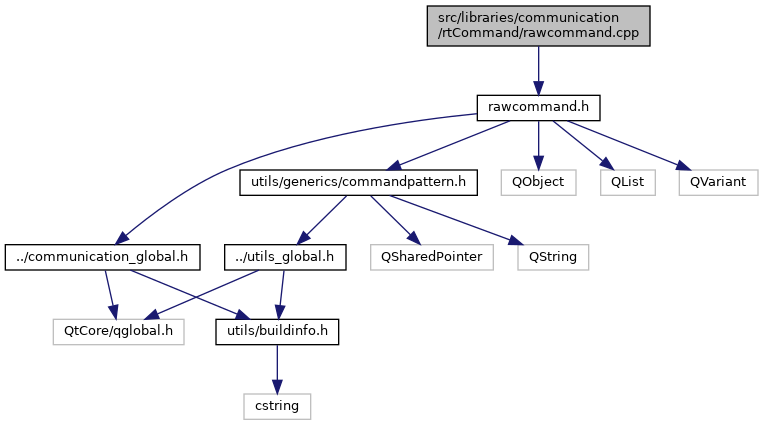
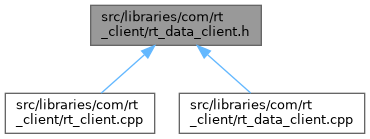
Go to the source code of this file.
Classes | |
| class | BIDSLIB::AbstractFormatReader |
| The AbstractFormatReader class provides a common interface for reading raw neurophysiology data from various file formats (EDF, BrainVision, etc.) used in BIDS datasets. More... | |
Namespaces | |
| namespace | BIDSLIB |
| BIDS dataset reading, writing, path construction, and sidecar metadata handling for iEEG/EEG/MEG. | |
Strategy interface for format-specific raw-data readers (BrainVision, EDF, …) consumed by BIDSLIB::BidsRawData.
SPDX-License-Identifier: BSD-3-Clause Copyright (c) 2026 MNE-CPP Authors
BIDS allows several wire formats for electrophysiology raw data (BrainVision .vhdr triplets and .edf are by far the most common for iEEG; .set and .nwb are also permitted). BIDSLIB::AbstractFormatReader is the polymorphic interface every concrete reader implements so BIDSLIB::BidsRawData can drive them uniformly: open parses the format-specific header, getInfo emits a populated FIFFLIB::FiffInfo, readRawSegment returns a calibrated (n_channels × n_samples) matrix in physical units, and toFiffRawData assembles the whole recording into a FIFFLIB::FiffRawData ready to hand to MNE-CPP's filtering / source-localisation stack. formatName and supportsExtension power the dispatch implemented by BIDSLIB::BidsRawData::createReader.
Ownership is via BIDSLIB::AbstractFormatReader::UPtr "UPtr" (std::unique_ptr) because the concrete readers keep the underlying file open for lazy segment reads.
Definition in file bids_abstract_format_reader.h.
 1.16.1