

|
v2.0.0
|
Loading...
Searching...
No Matches
|
|
v2.0.0
|
Implementation of FiffCov: read / write of *-cov.fif files, projector application, regularization and whitening eigendecomposition. More...
#include "fiff_cov.h"#include "fiff_stream.h"#include "fiff_raw_data.h"#include "fiff_evoked_set.h"#include "fiff_info_base.h"#include "fiff_dir_node.h"#include "fiff_file.h"#include <math/linalg.h>#include <QPair>#include <QFile>#include <Eigen/SVD>#include <QDebug>#include <stdexcept>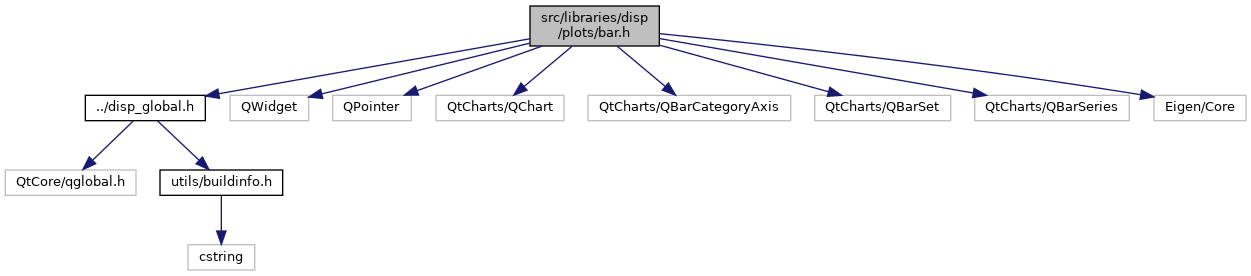
Go to the source code of this file.
Implementation of FiffCov: read / write of *-cov.fif files, projector application, regularization and whitening eigendecomposition.
SPDX-License-Identifier: BSD-3-Clause Copyright (c) 2012-2026 MNE-CPP Authors
Round-trips with mne.Covariance in MNE-Python. Carries the matrix, the channel names, the kind, the active SSP projectors and the nfree degrees-of-freedom count needed by the source-localization pipeline.
Definition in file fiff_cov.cpp.
 1.16.1