

|
v2.0.0
|
Loading...
Searching...
No Matches
|
|
v2.0.0
|
Export/import macros and build-info entry points for DECODINGLIB. More...
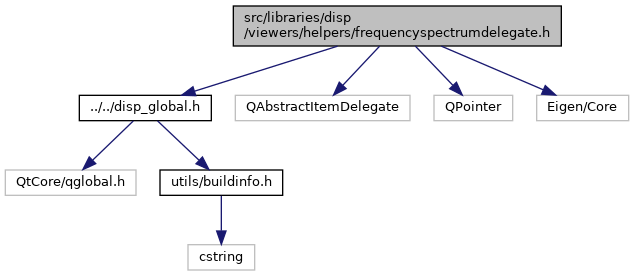
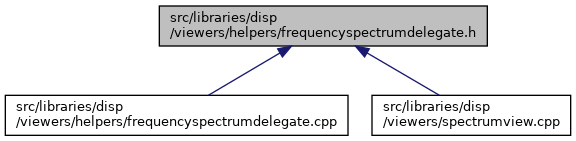
Go to the source code of this file.
Namespaces | |
| namespace | DECODINGLIB |
| Supervised and unsupervised spatial-filter decompositions for M/EEG decoding. | |
Macros | |
| #define | DECODINGSHARED_EXPORT |
Functions | |
| DECODINGSHARED_EXPORT const char * | DECODINGLIB::buildDateTime () |
| DECODINGSHARED_EXPORT const char * | DECODINGLIB::buildHash () |
| DECODINGSHARED_EXPORT const char * | DECODINGLIB::buildHashLong () |
Export/import macros and build-info entry points for DECODINGLIB.
SPDX-License-Identifier: BSD-3-Clause Copyright (c) 2026 MNE-CPP Authors
DECODINGLIB groups the supervised- and unsupervised-decomposition algorithms that turn raw M/EEG into discriminative or regressable features for brain-computer interfaces and pattern-recognition pipelines: Common Spatial Patterns (CSP), Source Power Comodulation (SPoC), Spatio-Spectral Decomposition (SSD), and ICA component labelling. All of these algorithms share the same mathematical skeleton — a generalised eigenvalue problem on two covariance matrices — which is why they live in one compilation unit and not in rtprocessing or dsp.
The header only declares the Qt Q_DECL_EXPORT / Q_DECL_IMPORT macro plus the build-stamp accessors used by the version probe in the applications layer; the actual algorithms are declared in decoding_csp.h, decoding_spoc.h, decoding_ssd.h and decoding_ica_label.h. Keeping the export macro in its own translation unit lets us link DECODINGLIB statically (STATICBUILD) or as a shared library without touching the per-algorithm files.
Definition in file decoding_global.h.
| #define DECODINGSHARED_EXPORT |
Definition at line 51 of file decoding_global.h.
 1.16.1