

|
v2.0.0
|
Loading...
Searching...
No Matches
|
|
v2.0.0
|
Reader for ANT .elc electrode files used by the topographic plotting widgets.
More...
#include "utils_global.h"#include <string>#include <vector>#include <QSharedPointer>#include <QVector>#include <QStringList>#include <QString>#include <QPoint>#include <Eigen/Core>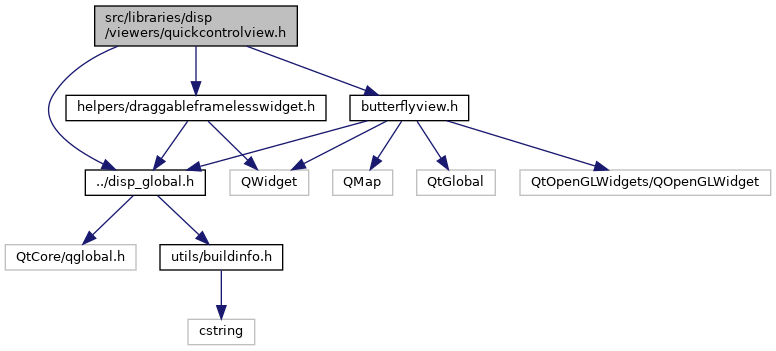
Go to the source code of this file.
Classes | |
| class | UTILSLIB::LayoutLoader |
| Reads ANT .elc electrode files into Qt/STL containers. More... | |
Namespaces | |
| namespace | UTILSLIB |
| Shared utilities (I/O helpers, spectral analysis, layout management, warp algorithms). | |
Reader for ANT .elc electrode files used by the topographic plotting widgets.
SPDX-License-Identifier: BSD-3-Clause Copyright (c) 2014-2026 MNE-CPP Authors
ANT .elc is the ASCII electrode list of ANT/eemagine systems with 3-D head-frame and 2-D projected positions and a unit declaration (mm / cm / m). MNE-C .lout layouts are read by MNELIB::MNELayout.
Definition in file layoutloader.h.
 1.16.1