
|
v2.0.0
|
Loading...
Searching...
No Matches
|
|
v2.0.0
|
Background worker that recomputes the dense MEG / EEG sensor-to-surface mapping matrix off the GUI thread. More...
#include "../disp3D_global.h"#include <fiff/fiff_evoked.h>#include <fiff/fiff_coord_trans.h>#include <QObject>#include <QMutex>#include <QVector>#include <QString>#include <QMap>#include <Eigen/Core>#include <memory>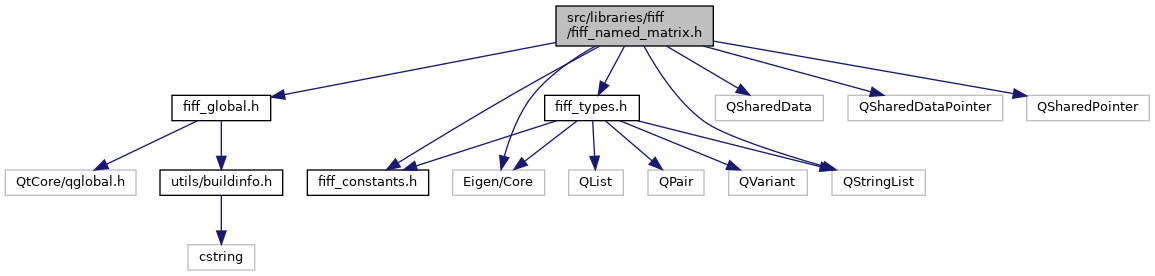
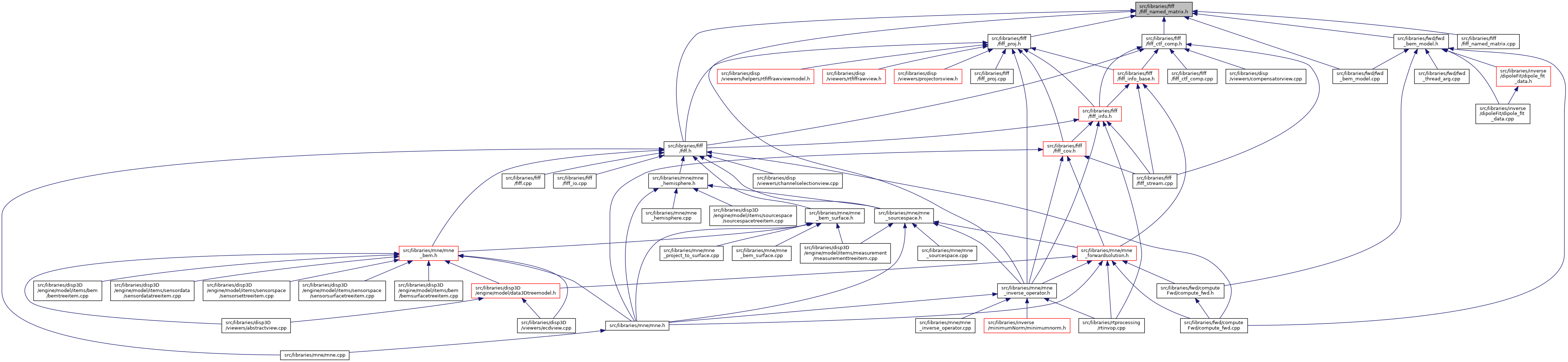
Go to the source code of this file.
Classes | |
| class | DISP3DLIB::RtSensorInterpolationMatWorker |
| Background worker for computing sensor field mapping matrices. More... | |
Namespaces | |
| namespace | DISP3DLIB |
| 3-D brain visualisation using the Qt RHI rendering backend. | |
Background worker that recomputes the dense MEG / EEG sensor-to-surface mapping matrix off the GUI thread.
SPDX-License-Identifier: BSD-3-Clause Copyright (c) 2026 MNE-CPP Authors
Owns the inputs to the field-map kernel — evoked info, head and helmet surface geometry, MRI / head coordinate transforms, channel picks and SSP projectors. Whenever any of these change via the (mutex-protected) setters, computeMapping rebuilds the dense (n_vertices x n_channels) matrix and emits it back to the data worker, so the streaming pipeline never stalls.
Definition in file rtsensorinterpolationmatworker.h.
 1.16.1