

|
v2.0.0
|
Loading...
Searching...
No Matches
|
|
v2.0.0
|
ROI-level aggregation of vertex-wise source estimates — the C++ peer of MNE-Python's extract_label_time_course.
More...
#include "inv_global.h"#include "inv_source_estimate.h"#include <fs/fs_label.h>#include <Eigen/Core>#include <QList>#include <QString>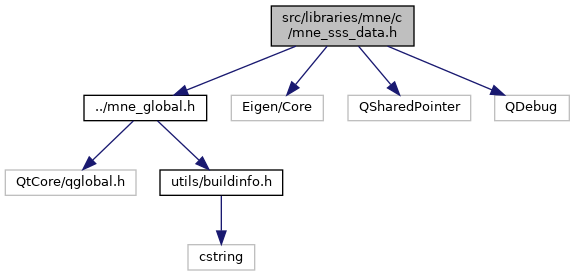
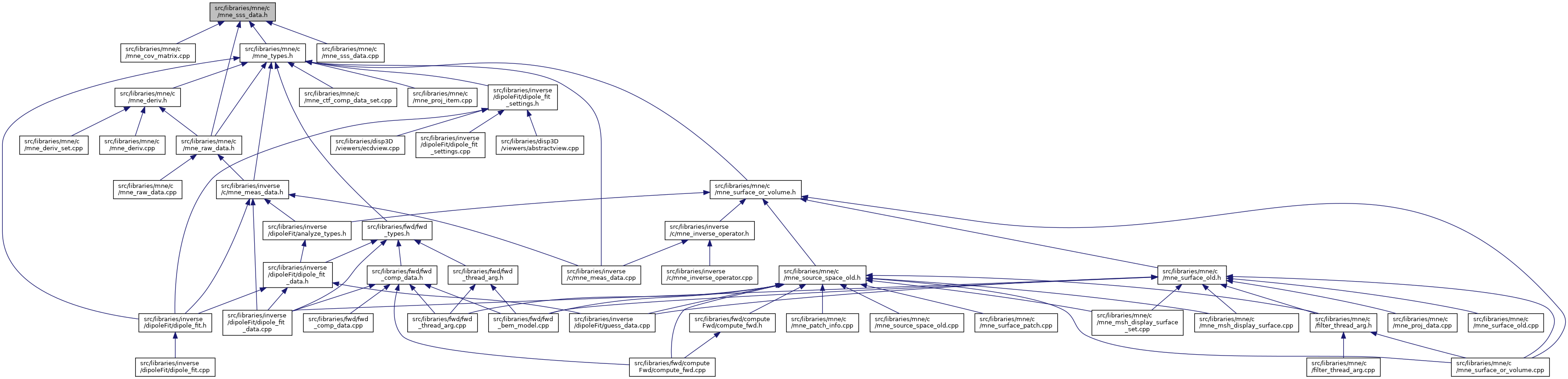
Go to the source code of this file.
Classes | |
| class | INVLIB::InvLabelTimeCourse |
| Extract ROI-level time courses from vertex-level source estimates. More... | |
Namespaces | |
| namespace | INVLIB |
| Inverse source estimation (MNE, dSPM, sLORETA, dipole fitting). | |
ROI-level aggregation of vertex-wise source estimates — the C++ peer of MNE-Python's extract_label_time_course.
SPDX-License-Identifier: BSD-3-Clause Copyright (c) 2026 MNE-CPP Authors
INVLIB::InvLabelTimeCourse provides the five standard aggregation modes used by mne-python — mean, mean_flip, pca_flip, max and auto — to collapse a per-vertex INVLIB::InvSourceEstimate into one time-course per FreeSurfer label. Sign-flip vectors are derived from the dominant orientation of the vertices in the label so that phase-locked averaging works on signed surface data without cancellation. The output matrix is (n_labels × n_times) and feeds directly into the connectivity, statistics and plotting libraries.
Definition in file inv_label_time_course.h.
 1.16.1