

|
v2.0.0
|
Loading...
Searching...
No Matches
|
|
v2.0.0
|
Spherical-spline surface Laplacian (Current Source Density) for EEG. More...
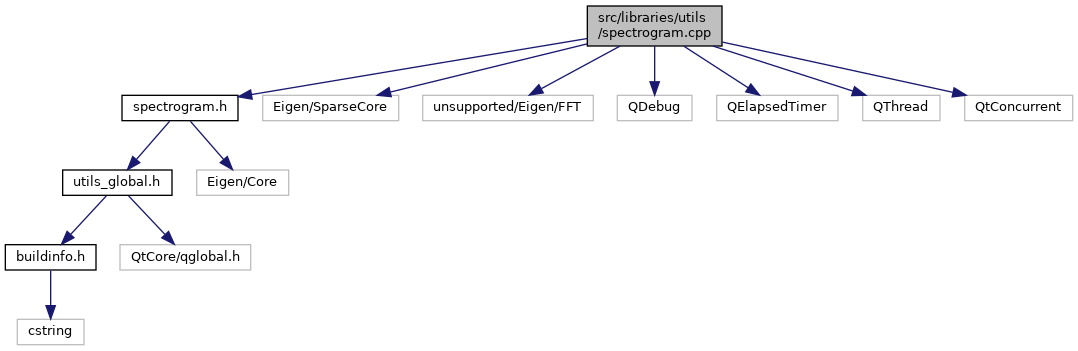
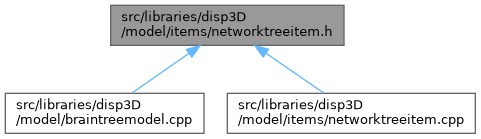
Go to the source code of this file.
Classes | |
| struct | UTILSLIB::SurfaceLaplacianResult |
| Result of a surface Laplacian (CSD) computation. More... | |
| class | UTILSLIB::SurfaceLaplacian |
| Surface Laplacian / Current Source Density (CSD) transformation. More... | |
Namespaces | |
| namespace | UTILSLIB |
| Shared utilities (I/O helpers, spectral analysis, layout management, warp algorithms). | |
Spherical-spline surface Laplacian (Current Source Density) for EEG.
SPDX-License-Identifier: BSD-3-Clause Copyright (c) 2026 MNE-CPP Authors
The surface Laplacian ∇²V approximates the radial current density at the scalp and acts as a reference-free spatial high-pass filter: it sharpens focal cortical sources, removes the smearing introduced by volume conduction, and is largely insensitive to the choice of recording reference. The implementation follows the spherical-spline interpolation scheme of Perrin et al. (Electroenceph. Clin. Neurophysiol. 72, 1989) with the order-m Legendre series of Perrin & Bertrand (1990), so the full pipeline reduces to two dense matrix multiplications and a single channel-rank inversion.
Smoothness is governed by the spline order m (typically 3 or 4) and the diagonal regularisation λ; flexibility is the same as MNE-Python's mne.preprocessing.compute_current_source_density.
Definition in file surface_laplacian.h.
 1.16.1