
|
v2.0.0
|
Loading...
Searching...
No Matches
|
|
v2.0.0
|
Implementation of CONNECTIVITYLIB::Coherency - shared cross/auto-spectral core for magnitude-squared coherence and the volume-conduction-robust imaginary coherence of Nolte et al. (2004). More...
#include "coherency.h"#include "../network/networknode.h"#include "../network/networkedge.h"#include "../network/network.h"#include <math/spectral.h>#include <QDebug>#include <QtConcurrent>#include <unsupported/Eigen/FFT>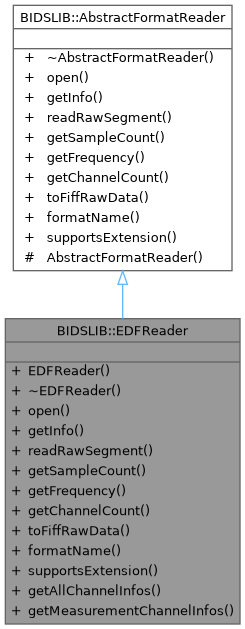
Go to the source code of this file.
Implementation of CONNECTIVITYLIB::Coherency - shared cross/auto-spectral core for magnitude-squared coherence and the volume-conduction-robust imaginary coherence of Nolte et al. (2004).
SPDX-License-Identifier: BSD-3-Clause Copyright (c) 2018-2026 MNE-CPP Authors
Definition in file coherency.cpp.
 1.16.1