|
v2.0.0
|
Loading...
Searching...
No Matches
|
|
v2.0.0
|
Multi-taper spectral estimation: tapered FFT, power and cross-spectral density, DPSS weighting. More...
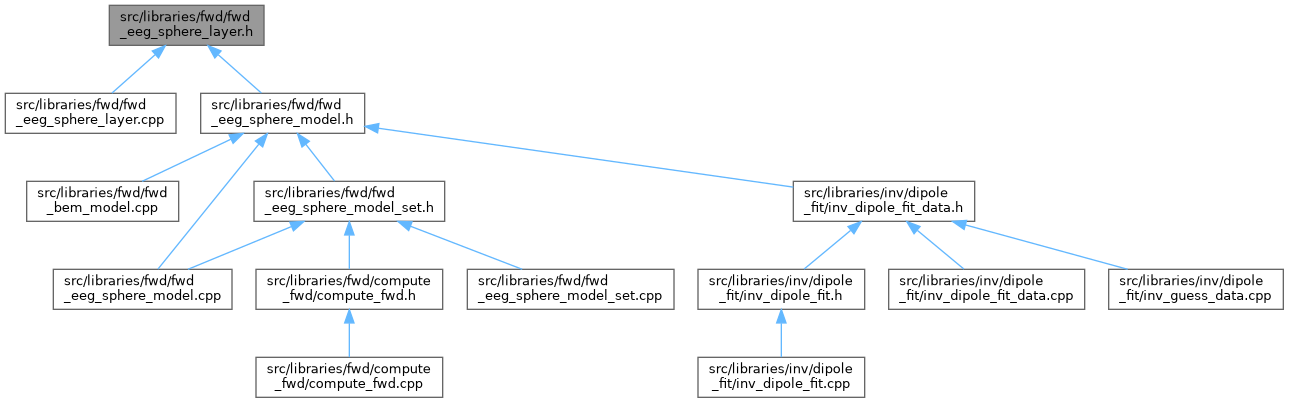
#include "math_global.h"#include <vector>#include <utility>#include <Eigen/Core>#include <QString>#include <QPair>#include <QSharedPointer>
Go to the source code of this file.
Classes | |
| struct | UTILSLIB::TaperedSpectraInputData |
| Per-row input bundle for parallel multi-taper spectral estimation (data row, taper matrix, FFT length). More... | |
| class | UTILSLIB::Spectral |
| Static multi-taper spectra, PSD and CSD estimator for MEG/EEG time series. More... | |
Namespaces | |
| namespace | UTILSLIB |
| Shared utilities (I/O helpers, spectral analysis, layout management, warp algorithms). | |
Multi-taper spectral estimation: tapered FFT, power and cross-spectral density, DPSS weighting.
SPDX-License-Identifier: BSD-3-Clause Copyright (c) 2026 MNE-CPP Authors
UTILSLIB::Spectral implements the multi-taper / Welch family of spectral estimators that the connectivity and time-frequency pipelines in mne-cpp rely on. A single segment of length N is windowed by each of K Slepian (DPSS) tapers, FFT'd to length iNfft, and the K complex spectra are combined into a power spectral density (PSD) or a cross-spectral density (CSD) matrix; multi-tapering reduces the variance of the estimator by roughly 1/K at the cost of (K+1)/(NW) of spectral resolution.
The class is static and operates row-wise on Eigen matrices so it can fan out across channels via QtConcurrent without touching any shared state. PSD scaling follows the one-sided convention (factor 2 on bins 1…Nyquist-1, no doubling at DC or Nyquist) so results are directly comparable to MNE-Python's psd_array_multitaper, and CSD matrices are returned as one complex matrix per frequency bin for direct ingestion by CONNECTIVITYLIB's coherence and phase estimators.
Reference: Percival & Walden (1993) "Spectral Analysis for Physical Applications", chapters 7–8.
Definition in file spectral.h.
 1.16.1