

|
v2.0.0
|
Loading...
Searching...
No Matches
|
|
v2.0.0
|
Set of CTF compensation matrices plus the currently active grade. More...
#include "mne_global.h"#include "mne_named_matrix.h"#include <fiff/fiff_sparse_matrix.h>#include <memory>#include <vector>#include <Eigen/Core>#include <QSharedPointer>#include <QList>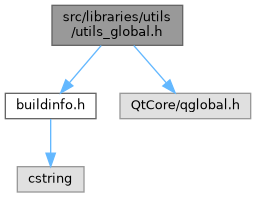
Go to the source code of this file.
Classes | |
| class | MNELIB::MNECTFCompDataSet |
| Collection of CTF third-order gradient compensation operators. More... | |
Namespaces | |
| namespace | MNELIB |
| Core MNE data structures (source spaces, source estimates, hemispheres). | |
Set of CTF compensation matrices plus the currently active grade.
SPDX-License-Identifier: BSD-3-Clause Copyright (c) 2026 MNE-CPP Authors
MNELIB::MNECTFCompDataSet aggregates the MNELIB::MNECTFCompData entries shipped with a CTF dataset and produces, given a target compensation grade, the channel-aligned compensator that must be applied to raw or forward data. Mirrors make_compensator in the MNE-Python and MNE-C codebases.
Definition in file mne_ctf_comp_data_set.h.
 1.16.1