
|
v2.0.0
|
Loading...
Searching...
No Matches
|
|
v2.0.0
|
Camera state and projection / view / model matrix computation for single- and multi-view layouts. More...
#include "../disp3D_global.h"#include "core/viewstate.h"#include <QMatrix4x4>#include <QQuaternion>#include <QVector3D>#include <QVector2D>#include <QPoint>#include <QSize>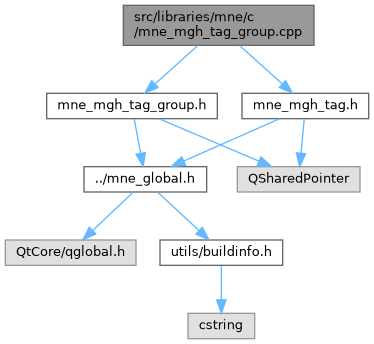

Go to the source code of this file.
Classes | |
| struct | DISP3DLIB::CameraResult |
| Computed camera matrices (projection, view, model) and vectors for a single viewport. More... | |
| class | DISP3DLIB::CameraController |
| Camera state and matrix computation. More... | |
Namespaces | |
| namespace | DISP3DLIB |
| 3-D brain visualisation using the Qt RHI rendering backend. | |
Camera state and projection / view / model matrix computation for single- and multi-view layouts.
SPDX-License-Identifier: BSD-3-Clause Copyright (c) 2026 MNE-CPP Authors
CameraController is widget-agnostic: it takes the visible scene centroid + extent and a per-pane DISP3DLIB::SubView and produces the DISP3DLIB::CameraResult bundle (projection, view, model, eye position, look-at and up vector) consumed by DISP3DLIB::BrainRenderer.
It also encodes the mouse-interaction conventions used everywhere in disp3D: left-drag rotates via quaternion accumulation, wheel zooms by exponential scaling around the scene centre, middle-drag pans by projecting screen-space deltas into the camera's local right / up basis, and the multi-view perspective pane orbits while the orthographic Top / Left / Front panes only pan + zoom.
Definition in file cameracontroller.h.
 1.16.1