

|
v2.0.0
|
Loading...
Searching...
No Matches
|
|
v2.0.0
|
Declaration of ArtifactDetect — ECG and EOG physiological artifact event detection. More...
#include "dsp_global.h"#include <fiff/fiff_info.h>#include <fiff/fiff_proj.h>#include <Eigen/Core>#include <QVector>
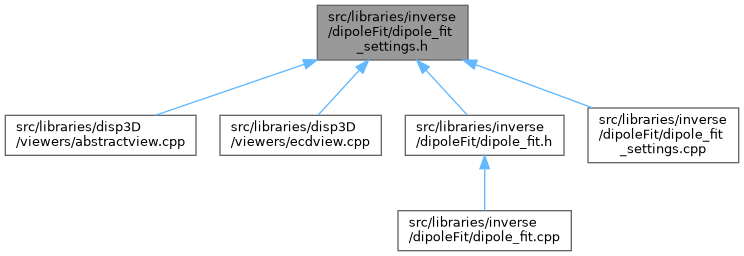
Go to the source code of this file.
Classes | |
| struct | UTILSLIB::ArtifactDetectEcgParams |
| ECG R-peak detection parameters (defined outside class to avoid Clang/GCC default-argument issues with nested structs). More... | |
| struct | UTILSLIB::ArtifactDetectEogParams |
| EOG blink / saccade detection parameters (defined outside class to avoid Clang/GCC default-argument issues with nested structs). More... | |
| struct | UTILSLIB::ArtifactDetectProjParams |
| SSP parameters of compute_proj_ecg / compute_proj_eog; ecg() and eog() give the MNE-Python defaults. More... | |
| class | UTILSLIB::ArtifactDetect |
| ECG and EOG physiological artifact event detection. More... | |
Namespaces | |
| namespace | UTILSLIB |
| Shared utilities (I/O helpers, spectral analysis, layout management, warp algorithms). | |
Declaration of ArtifactDetect — ECG and EOG physiological artifact event detection.
SPDX-License-Identifier: BSD-3-Clause Copyright (c) 2026 MNE-CPP Authors
ECG detection is mne.preprocessing.find_ecg_events: a 5–35 Hz zero-double firwin2 band-pass and the qrs_detector window search; without an ECG channel the mean of the magnetometers (or gradiometers) stands in for it.
EOG detection is mne.preprocessing.find_eog_events: the strongest EOG channel, band-passed 1–10 Hz, searched with mne.preprocessing.peak_finder.
Definition in file artifact_detect.h.
 1.16.1