

|
v2.0.0
|
Loading...
Searching...
No Matches
|
|
v2.0.0
|
Weighted edge between two CONNECTIVITYLIB::NetworkNode instances; stores the full per-frequency weight matrix and the scalar band-averaged weight. More...
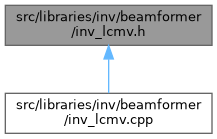
Go to the source code of this file.
Classes | |
| class | CONNECTIVITYLIB::NetworkEdge |
| Weighted, directional edge in a Network; carries per-frequency weights plus a band-averaged scalar. More... | |
Namespaces | |
| namespace | CONNECTIVITYLIB |
| Functional connectivity metrics (coherence, PLV, cross-correlation, etc.). | |
Weighted edge between two CONNECTIVITYLIB::NetworkNode instances; stores the full per-frequency weight matrix and the scalar band-averaged weight.
SPDX-License-Identifier: BSD-3-Clause Copyright (c) 2016-2026 MNE-CPP Authors
Every functional-connectivity estimator in CONNECTIVITYLIB produces one CONNECTIVITYLIB::NetworkEdge per ordered channel pair (or per unordered pair for symmetric metrics) and attaches it to the CONNECTIVITYLIB::Network. The edge owns the full weight matrix returned by the metric - typically one row per frequency bin and one or more columns per estimator-specific output - and a configurable [iStartWeightBin, iEndWeightBin) reduction window that defines the single scalar weight used by the visualisation and thresholding paths.
The active/inactive flag and the threshold-aware comparison operators are read by Network::getThresholdedEdges so that GUI plugins can toggle the displayed edge density without rebuilding the underlying connectivity result.
Definition in file networkedge.h.
 1.16.1